
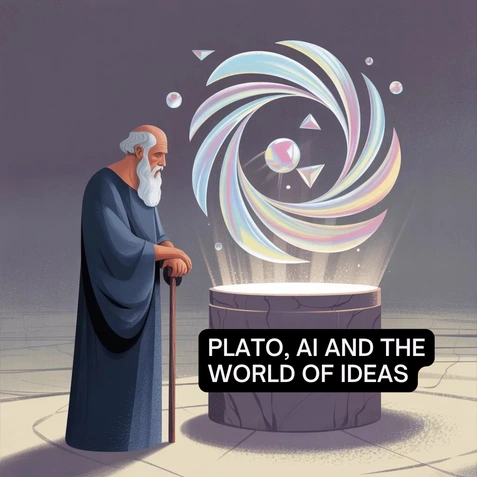
This article explores the tension between Plato’s eternal, immutable Forms and the radically ephemeral nature of digital “ideas” generated by artificial intelligence. While Platonic Ideas inhabit a timeless metaphysical realm, AI‑generated concepts exist only as transient computational outputs, shaped by cloud infrastructures, temporary instances, and probabilistic models. By contrasting the stability of the Iperuranio with the volatility of digital systems, the article examines how neural networks produce unique, non‑persistent “ideas,” how cloud architectures reinforce impermanence, and how the digital age challenges traditional notions of truth, knowledge, and being. Ultimately, it argues for a renewed philosophical awareness capable of guiding humanity out of the “digital cave” and toward a deeper understanding of reality in the age of AI.
This article explores how artificial intelligence forces a radical rethinking of epistemology and ontology, transforming not only how knowledge is produced but also how reality itself is represented. Through personal reflections and philosophical analysis, the author argues that AI shifts truth from causal understanding to probabilistic prediction, reducing human experience to computational patterns. The piece warns against algorithmic determinism and calls for a renewed digital humanism—one that restores human judgment, preserves ontological complexity, and ensures that technology remains a tool serving human flourishing rather than redefining it.