Token Economy: The Illusion of Free Value
The token economy is reshaping how we define value in the digital age. Every interaction, every query, every pixel carries a price, yet the promise of free tokens often masks a deeper cost. Understanding this paradox is essential for anyone engaging with modern digital platforms.
Tokens function as micro-fragments of language and value, but their apparent harmlessness belies a complex monetisation system. The allure of receiving tokens without payment is a marketing bait designed to draw users in, only to activate a billing mechanism at the first real engagement. In this economy, there are no free meals.
The Illusion of Free Tokens
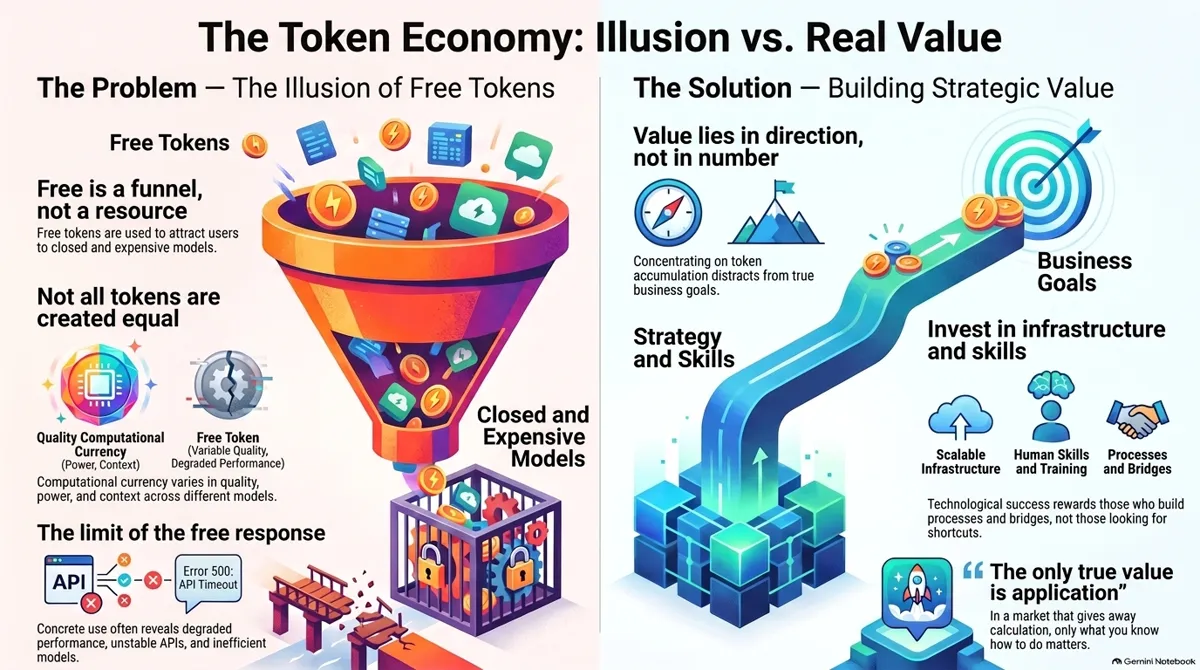
Promotional campaigns trumpet the availability of free tokens, yet this is a carefully crafted trick. The promise of zero cost conceals a strategy that leads users toward increasingly expensive models. What appears to be a gift is actually an entry point into a system where every token carries a hidden price tag. Recognising this illusion is the first step toward conscious participation.
A token is not a uniform object. The difference between a token representing a cutting‑edge language model and one tied to an obsolete system is profound. It resembles comparing a fifty‑euro banknote to a supermarket voucher: superficially similar, yet offering radically different opportunities and potentials. The context and the system behind the token determine its real value.
Value Beyond the Token Count
In the current economy, the battle is over the cost of thought rather than the quality of products, the shift I described in The Real AI Disruption Is Not Intelligence, It Is the Price. Business models increasingly focus on optimising existing processes instead of fostering genuine innovation. When discussing value, the crucial insight is that it is not the number of tokens one possesses that matters, but how and where they are used. A large pile of tokens is useless without a strategic plan for deployment.
This shift represents an anthropological epiphany: value is no longer tied solely to monetary exchange but to the ability to act effectively within a tokenised system. Those who chase billions of free tokens miss the fundamental point. The real task is not saving tokens, but implementing conscious strategies to make the best use of available resources.
The Token Utopia and Its Pitfalls
We are told we can have everything for free, while being guided toward increasingly costly and complex models. This token utopia creates an illusion of progress, but in reality it accumulates debt, both economic and cognitive. It repeats a pattern I have traced before: the illusion of free AI hides a system that charges those who cannot read the price tag. Believing we are stepping into a bright future, we may instead be walking into a trap of dependency and hidden costs.
Looking beyond tokens means building real skills and solid processes. Those who fixate on immediate gains are looking at the finger; those who look at the moon are charting a long‑term vision. Technology rewards those who invest time and resources in creating robust, well‑structured systems. Shortcuts, however attractive, rarely lead to sustainable results.
The key question is: what can you do with the tokens you are given? This inquiry separates a superficial approach from a strategic one. Only through critical, conscious reflection can we truly benefit from what tokens represent. The token economy is not merely about digital exchanges; it is an opportunity to redefine our approach to value and innovation.
Building Skills for the Long Term
Wisdom in the token economy means investing in genuine skills and processes. The answer to “how can we use tokens to build a better, fairer future?” lies not in hoarding tokens, but in developing the competence to deploy them effectively. A solid system requires commitment and a clear vision. Tokens are a tool, not a goal.
By remaining vigilant about promises of freebies and illusions of effortless gain, we can steer toward a more equitable and sustainable economy, one where value is restored to people rather than remaining an abstract ledger entry. The token economy is an evolving field that demands attention and understanding, but it also offers a chance to rethink what value truly means.
Frequently Asked Questions
Why are free tokens an illusion?
Free tokens are a marketing bait; they conceal a monetisation mechanism that activates as soon as you engage with the system. What seems like a gift is the entry point to a model that eventually generates costs.
How can I make effective use of tokens?
Focus not on the quantity of tokens, but on how and where you deploy them. Build real skills and processes, and use tokens strategically within a well‑structured system.
What does “looking beyond tokens” mean?
It means investing in long‑term skills and solid processes instead of chasing short‑term gains. Those who look only at the token are missing the bigger picture of value and innovation.
Is the token economy only about monetary value?
No. The token economy redefines value to include cognitive, strategic, and systemic dimensions. It is an opportunity to restore value to people and build a more equitable future.
Keep exploring
Deep dives, daily AI commentary in multiple languages, and my curated showcase of lifelong learning.